
An executive rental is a fully furnished Toronto unit leased to a relocating executive or corporate assignee for roughly 30 to 180 days, priced above a standard long-term lease because the tenant gets hotel-grade furnishing and a fast response to any request. It sits between a 12-month lease and a nightly short-term rental: fewer turnovers than a guest booking, shorter commitment than a year-long tenancy, and rented at a premium that reflects both. For an owner near downtown Toronto, a hospital campus, or a major employer, converting a unit to an executive rental can be the highest-yield option available without listing it as a nightly rental.
The tenant is almost never someone apartment-hunting the way a typical renter does. Most are relocating for work: an executive transferred to a Toronto office on a defined assignment, a consultant on a multi-month project posting, a specialist or medical resident starting a fellowship, or a film or television crew member working a production schedule that runs weeks rather than a full season. A relocation company, an employer mobility program, or the tenant own employer is frequently the one paying or reimbursing the rent, which changes what the tenant actually cares about.
That tenant is not comparison shopping on price the way a long-term renter is. They are comparing the unit to a hotel suite or a serviced apartment, and they expect it to look and function like one: furnished completely, cleaned to a standard above a typical move-in, and responsive when something breaks. An owner who lists a lightly furnished unit at a long-term rate and calls it executive is competing in the wrong category.
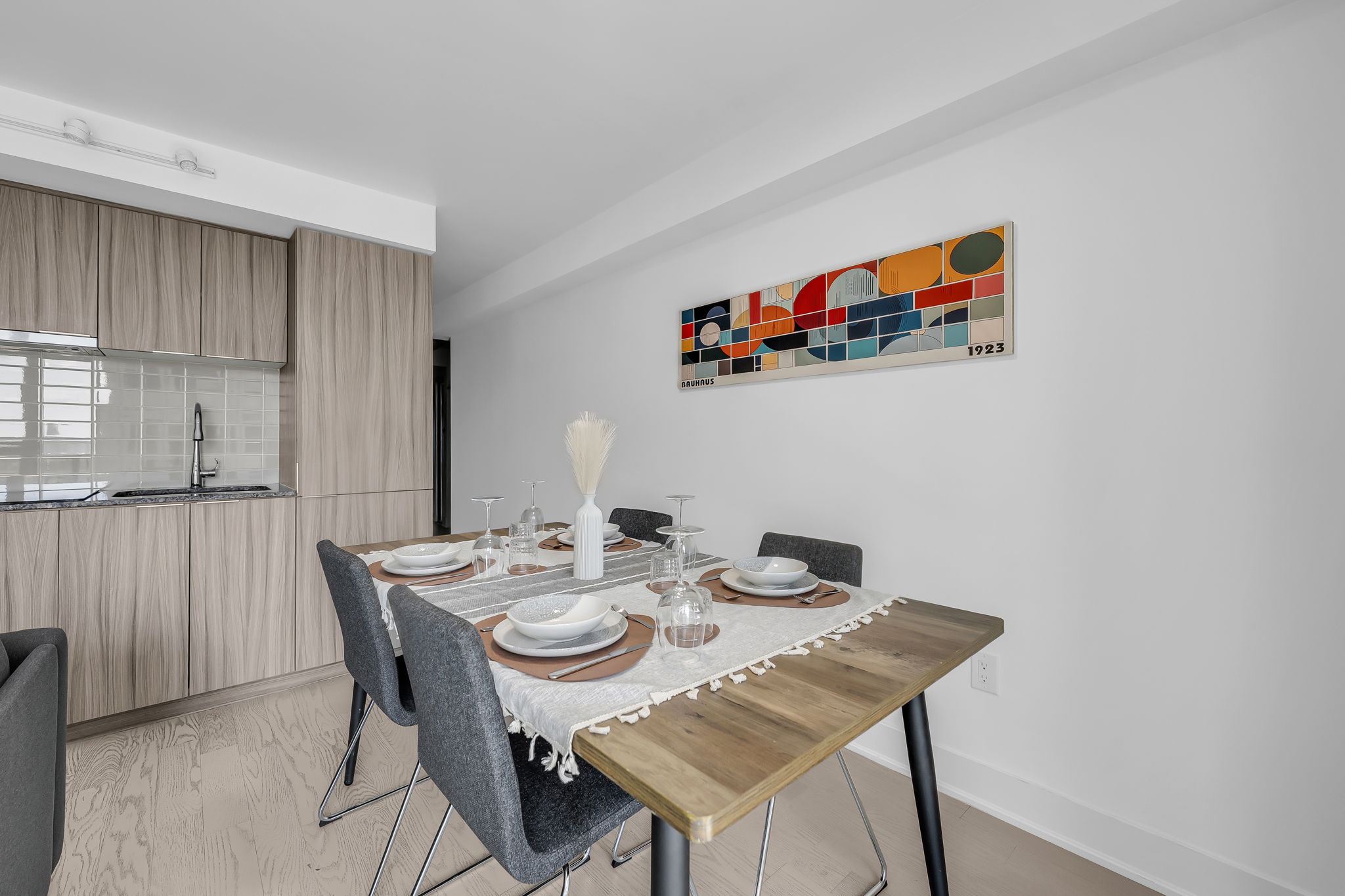
Three things separate an executive-grade unit from an ordinary furnished rental. First, the furnishing has to be complete and matched, not a mix of hand-me-down pieces: a proper bed, real linens, a full kitchen a tenant can cook in immediately, and a dedicated desk with reliable high-speed internet, since a large share of these tenants are working from the unit on the days they are not in an office. Second, move-in has to be turnkey. A tenant on a 60-day placement is not going to open a hydro account or shop for a coffee maker; utilities, internet, and basic supplies need to be live and stocked before they arrive. Third, and the one owners underestimate most, is response time. A maintenance issue that would wait a week under a standard lease needs same-day or next-day resolution here, because the tenant expectation was set by hotel service, not residential tenancy norms.
| Attribute | Executive Rental | Standard 12-Month Lease |
|---|---|---|
| Typical term | 30 to 180 days | 12 months or longer |
| Furnishing | Fully furnished, hotel-grade | Usually unfurnished, or the tenant own |
| Tenant profile | Relocating executive or corporate assignee | Long-term resident |
| Rent structure | Premium rate reflecting furnishing and service | Base market rent |
| Turnover | Higher than a standard lease, lower than a nightly rental | Low, one tenant for the full term |
| Response expectation | Same-day or next-day | Standard maintenance timelines |
Owners hear that an executive rental commands a premium over a standard lease and assume it is close to free money. It is not. The premium is priced for a real cost structure: the upfront capital tied up in matched, hotel-grade furnishing, more frequent cleaning and inspection between placements than a single-tenant lease ever requires, and a service standard that means someone is available to solve a problem the same day it comes up, not whenever it is convenient. An owner who charges the premium but delivers standard-lease service is the fastest way to lose the tenant, and the relocation company trust, on the next placement.
This demand tracks Toronto employment geography more than its residential geography. It clusters around the financial core and the hospital and university corridor downtown, where relocations, fellowships and project postings originate, and it extends out to the corporate and industrial employment nodes across the region, including Toronto, North York, Etobicoke, Scarborough, Mississauga, Vaughan, Richmond Hill and Oakville, wherever an employer is rotating staff through on a defined placement rather than a permanent transfer.
A standard long-term lease under Ontario Residential Tenancies Act locks in one tenant for a year or longer at a base market rent, with none of the furnishing or turnover work an executive rental requires; our guide to long-term rental management in Toronto covers what that actually involves day to day. A nightly short-term rental turns the unit over every few days rather than every few months, a different operating model entirely, covered on our short-term rental management page, where licensing, remittance and nightly pricing all apply in a way they do not to an executive placement. An executive rental sits between the two: fewer turnovers than a nightly rental, a shorter commitment than a standard lease, and rent priced to reflect both.
Furnishing a unit to executive standard is a real upfront cost, and running one well takes more hands-on coordination than a standard 12-month lease: sourcing and vetting tenants for shorter placements, handling turnover cleaning and inspection between stays, and staying available for the faster response time the category expects. For what a property manager typically charges to handle work like this in Toronto, see our property management fee breakdown, which walks through how those fees are actually structured.
The category rewards specific conditions: a unit within easy reach of downtown, a hospital, or a major employment node, an owner who can either furnish it properly or fund that furnishing, and either the time to manage shorter placements and faster turnarounds personally, or a plan to hand that work to someone who does it full time. Our corporate rental management page covers how this kind of furnished, mid-term placement is run in practice, including the vetting, turnover and communication a relocating tenant expects.
An executive rental is a fully furnished unit leased to a relocating executive or corporate assignee for roughly 30 to 180 days, priced above a standard lease for the furnishing and faster service included. It sits between a standard 12-month lease and a nightly short-term rental.
Most executive placements run 30 to 180 days, matching the length of a corporate assignment, project posting or fellowship rather than a full year. A placement shorter than that usually functions more like a nightly short-term rental.
An executive rental turns over far less often, weeks or months between tenants rather than every few nights, and is rented to one placement-based tenant at a time rather than a rotating series of guests. The furnishing standard and pricing model both follow from that difference.
Yes, an executive rental typically commands a premium over a standard lease rate, because the tenant is paying for complete furnishing and a faster response standard, not just square footage. The premium reflects that added service and capital, not simply a shorter term.
Not by law, but the faster response time and turnover work the category expects are harder to sustain alone than a standard 12-month lease requires. Owners who cannot commit to same-day responsiveness personally are usually better served handing that work to a manager who does it full time.
Considering converting a unit to an executive rental in Toronto?
Talk to Certus